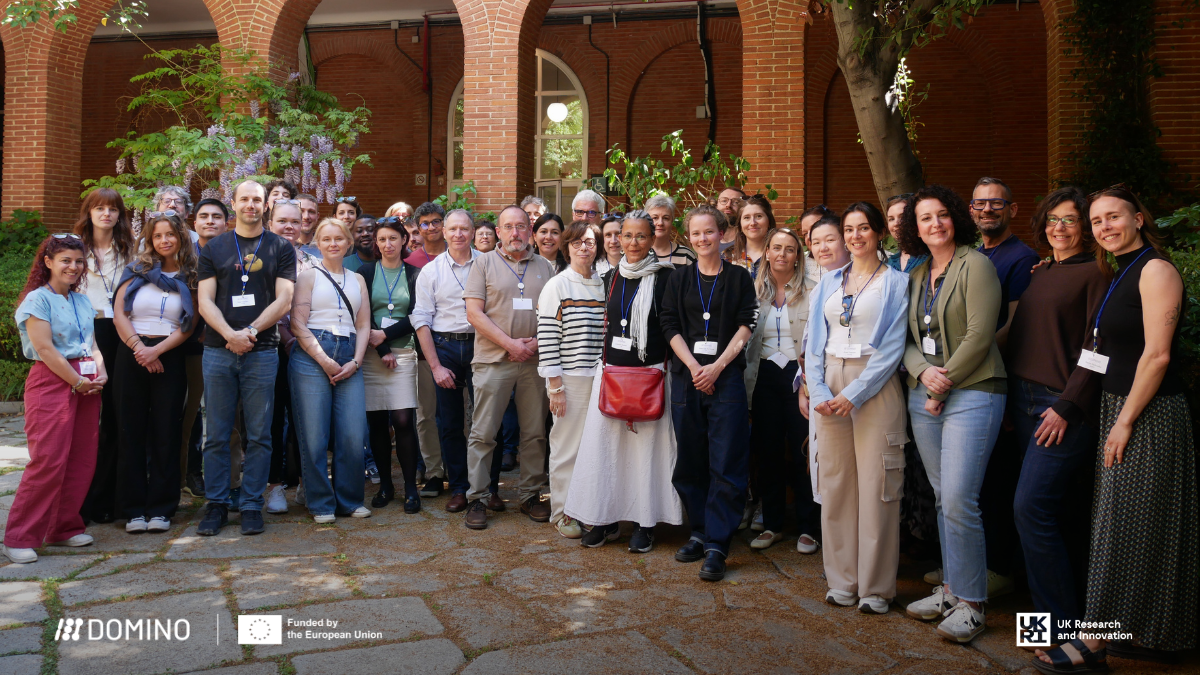
What’s the future on human Microbiome Research?

Published: Feb 29, 2024 by FME Lab

The final conference of the Human Microbiome Action coordinated by Joël Doré, Emmanuelle Maguin and Mani Arumugam took place in Brussels at les Ateliers des Tanneurs on the 29th of February. A lot of very interesting talks summarizing the state of the art in Human microbiome research meanwhile paving the ground on policies for safeguarding public health.
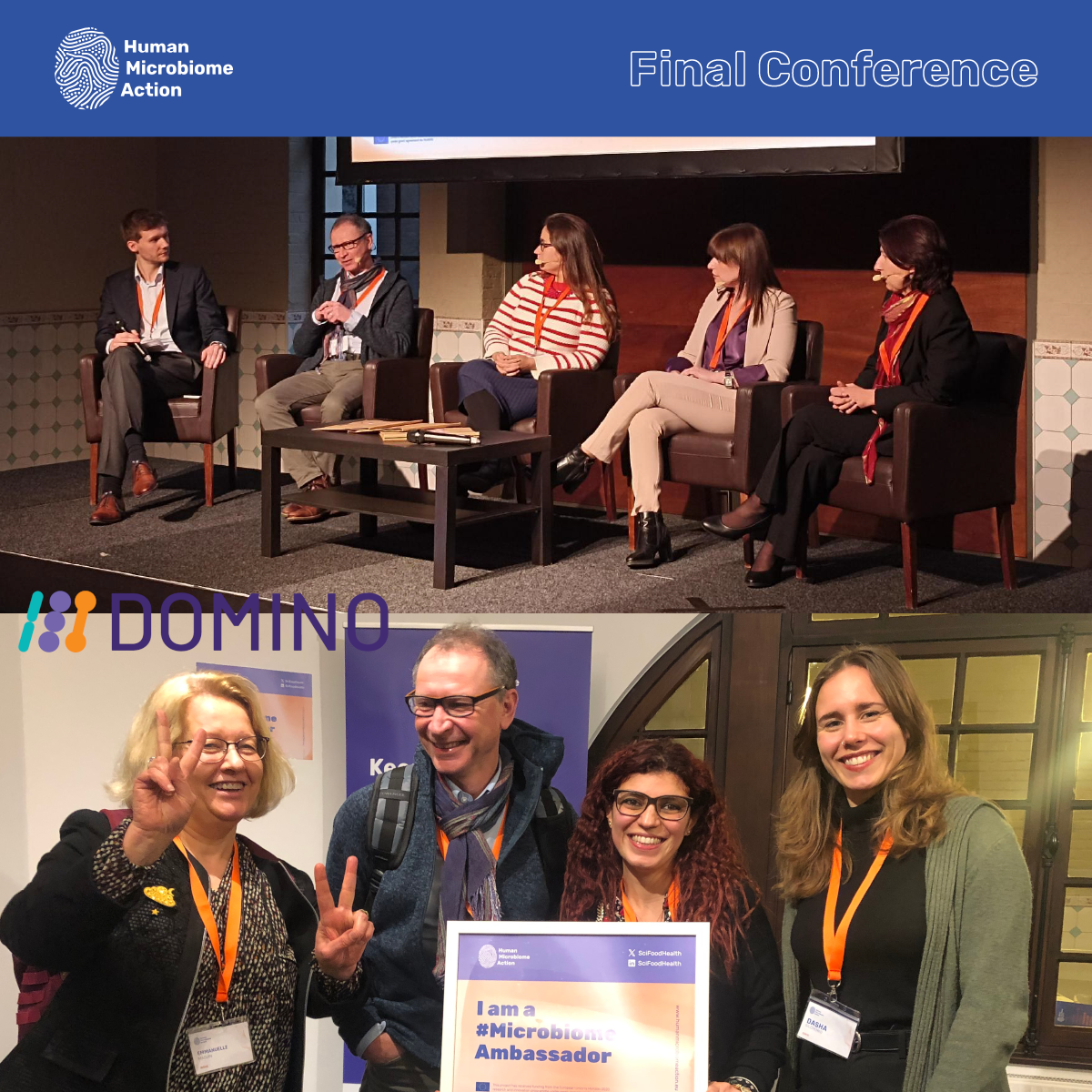
Stéphane Chaillou (INRAE), as coordinator of #DominoEU project, participated in the last panel discussion “Where Will Microbiome Research Lead Us? Vision and Roadmap for Future Endeavours” together with Tanja Kostic (#MicrobiomeSupport Association; Austrian Institute of Technology), Carolina Alves Costa Silva (#ONCOBIOME; Gustave Roussy), Federica Carraturo (#GEMMA; University of Naples), and Stephan Kampshoff (Eufic) as moderator. Following a very interesting overview given by Emmanuelle Maguin on “Identifying the Most Pressing Research Questions for Future Studies » ; We gave and discussed with the audience our views on specific research opportunities concerning the link between healthy microbiomes and diet or diseases.

A specific great snapshop from #DominoEU colleagues (Emmanuelle, Debora and Dascha) as #microbiome ambassadors !
Share

Latest Posts

The FME lab communicates about the links between the microbiome, nutrition and health.

On Thursday 27 November, the FME lab took part in the Food System Microbiomes Conference in Wageningen during the session dedicated to the connections between microbiomes, nutrition and health. The session was co-chaired by Stéphane Chaillou (INRAE, Micalis) and Prof. Christophe Courtin (KU Leuven), and provided an opportunity to showcase advances from two major European projects: DOMINO and HealthFerm.

Understanding How Fermented Foods Shape Health Insights From a New PIMENTO Review

A new scoping review published in Frontiers in Nutrition1 as part of the COST Action PIMENTO initiative provides a comprehensive assessment of what is currently known about the health effects of fermented foods in specific human populations. This work reflects a substantial collective effort. We conducted an extensive and rigorous screening of the scientific literature, reviewing and selecting studies across many categories of fermented foods and health outcomes.

  1. Humblot Christèle, Alvanoudi Panagiota, Alves Emilia, Assunçao Ricardo, Belovic Miona, Bulmus-Tuccar Tugce, Chassard Christophe, Derrien Muriel, Karagöz Mustafa Fevzi, Karakaya Sibel, Laranjo Marta, Mantzouridou Fani Th, Rosado Catarina, Pracer Smilja, Saar Helen, Tap Julien, Treven Primož, Vergères Guy, Pertziger Eugenia, Savary-Auzeloux Isabelle, A scoping review of the health effects of fermented foods in specific human populations and their potential role in precision nutrition: current knowledge and gaps. Frontiers in Nutrition. 2025 doi:10.3389/fnut.2025.1650633 

New tool suite - Food Microbiome Metabolic Modules (F3M)

The FME team has published a new preprint in Open Research Europe entitled
“Food Microbiome Metabolic Modules (F3M): a tool suite for functional profiling of food microbiomes.”
Read the article