Fourth scientific meeting of ANR metasimfood project in Rennes

Published: Dec 12, 2023 by FME Lab

This time, the 7 partners gathered in Rennes this Tuesday 12th of December and were hosted by STLO at the Institut Agro.
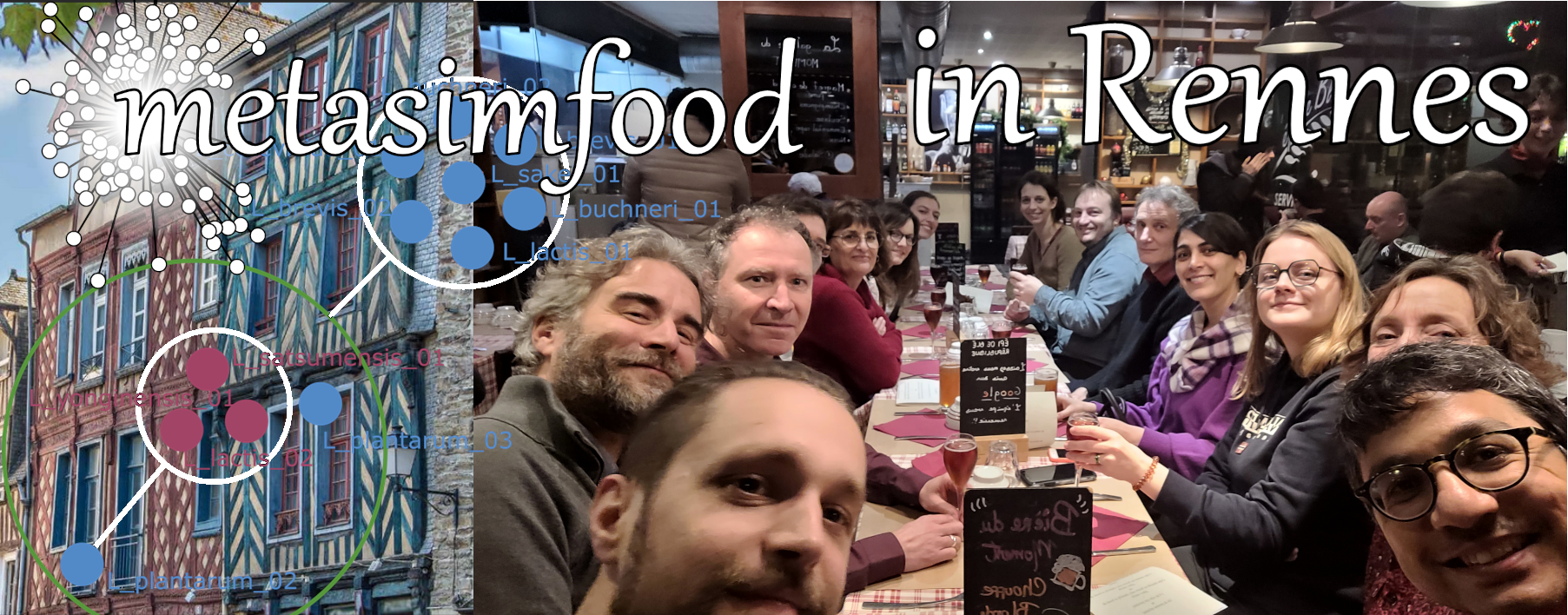
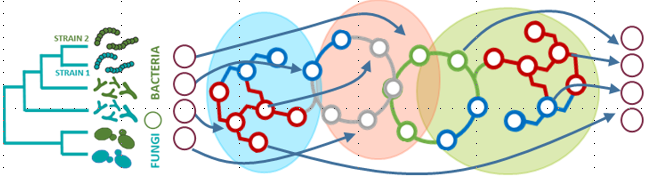
After two years dedicated to prepare the food models for synthetic ecology (Wine and fermented vegetables), the project is now entering into the most exiting (but challenging) part dedicated to the screening of environmental factors and the design of microbial consortia. The project is now ready for integrating many omics data for ecological network modelling. Thanks to Florence Valence for hosting us and for managing the nice diner at crêperie l’épi de blé. We had lively discussions following the presentation of Elham Karimi on genome-scale modelling, minimal community design, key species, and the presentation of Mahendra Maraidassou on fractional factorial design and response surface modelling. The metasimfood project is truly inter-disciplinary, and is taking our teams into a new era of food microbiology.
Share

Latest Posts

DOMINO 3rd annual meeting in Madrid

After three years, the #DominoEU project has reached full speed, with significant results across all project objectives. The three-day meeting provided an opportunity to review the very busy year of 2025 and the many key findings that can be leveraged in the coming months.

DOMINO Workshop on F3M Food Microbiome Metabolic Modules at CSIC Madrid

The 14th of April 2026, teams from INRAE (MICALIS & MaIAGE) organised a hands-on workshop in Madrid at CSIC, focused on the F3M ecosystem (Food Microbiomes Metabolic Modules) and its associated tools for functional microbiome analysis.

FME at Bioket 2026 advancing synthetic microbial ecology for sustainable food

At the BIOKET (Bioeconomy Key Enabling Technologies) conference in Fribourg, Julien presented recent advances from the SynthPlex project, positioning synthetic microbial ecology as a core tool for next-generation fermented foods.