Exploring the Interconnected World of Microbiomes

Published: Jun 27, 2023 by FME Lab

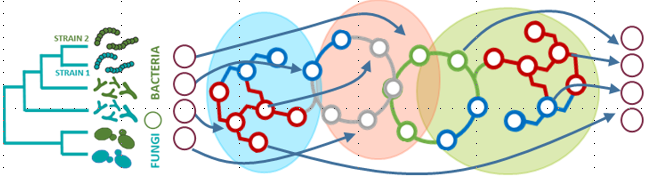
In our contribution to the last Microbiome Support CSA review, coordinated by A. sessitch and T. Kostic1, we reveal the critical roles of microbiomes in maintaining ecosystem health and their extensive interconnectivity across different environments. These diverse microbial communities are exchanged constantly, affecting everything from climate regulation to human health.

While some transfer events may be harmful, such as the spread of pathogens, our study highlights the significant positive impacts of microbiome exchange. Transferred microbes can introduce novel functions beneficial for ecosystem adaptation and human health.

Advanced sequencing technologies now allow us to rapidly examine these complex microbiomes and trace the transmission of individual strains. We argue for a holistic approach to fully comprehend the dynamics of microbiome transfers and their far-reaching implications.

Acknowledging this microbiome interconnectedness can lead to novel strategies for improving health and planetary wellbeing. It’s a fascinating, interconnected world out there, and microbiomes are playing an integral part. Let’s not overlook them!

  1. Sessitsch A, Wakelin S, Schloter M, et al. Microbiome Interconnectedness throughout Environments with Major Consequences for Healthy People and a Healthy Planet. Microbiol Mol Biol Rev. 2023;e0021222. doi:10.1128/mmbr.00212-22 

Share

Latest Posts

From food spontaneous fermentations to food designed consortia

Our new article entitled “Microbiome metabolic modeling as a tool for innovation in fermented foods” has been published in in Current Opinion of Food Science1.

  1. Elham Karimi, Julien Tap, Marie-Christine Champomier-Vergès, Stéphane Chaillou. Microbiome metabolic modeling as a tool for innovation in fermented foods. Current Opinion of Food Science. 2025 

The FME lab communicates about the links between the microbiome, nutrition and health.

On Thursday 27 November, the FME lab took part in the Food System Microbiomes Conference in Wageningen during the session dedicated to the connections between microbiomes, nutrition and health. The session was co-chaired by Stéphane Chaillou (INRAE, Micalis) and Prof. Christophe Courtin (KU Leuven), and provided an opportunity to showcase advances from two major European projects: DOMINO and HealthFerm.

Understanding How Fermented Foods Shape Health Insights From a New PIMENTO Review

A new scoping review published in Frontiers in Nutrition1 as part of the COST Action PIMENTO initiative provides a comprehensive assessment of what is currently known about the health effects of fermented foods in specific human populations. This work reflects a substantial collective effort. We conducted an extensive and rigorous screening of the scientific literature, reviewing and selecting studies across many categories of fermented foods and health outcomes.

  1. Humblot Christèle, Alvanoudi Panagiota, Alves Emilia, Assunçao Ricardo, Belovic Miona, Bulmus-Tuccar Tugce, Chassard Christophe, Derrien Muriel, Karagöz Mustafa Fevzi, Karakaya Sibel, Laranjo Marta, Mantzouridou Fani Th, Rosado Catarina, Pracer Smilja, Saar Helen, Tap Julien, Treven Primož, Vergères Guy, Pertziger Eugenia, Savary-Auzeloux Isabelle, A scoping review of the health effects of fermented foods in specific human populations and their potential role in precision nutrition: current knowledge and gaps. Frontiers in Nutrition. 2025 doi:10.3389/fnut.2025.1650633