MicroEngine
INRAE HOLOFLUX
Description
MicroEngine : Using synthetic ecosystems as a chassis for microbiome engineering.
Microbiome engineering offers promising prospects for tackling a range of public health and environmental challenges. Bottom-up (strain-to-ecosystem) and top-down (ecosystem-to-strain) approaches can be used to create experimental systems for testing and acquiring new knowledge about microbiomes.
However, these approaches, adapted to driving microbial fluxes from one microbiome to another, have received little conceptual or experimental attention. We propose to study the possibility of such approaches for the flux between food and gut microbiomes.
The project involves a collaborative effort with several partners:
- Emile Auria and Nicolas Barraud from INRAE “Ferment du futur” Innovation Center
- Daniel Rios Garza and Theodore Bouchez from INRA PROSE
This project proposes to develop a ecological chassis,which enables a strain with a key functionality to be transported from one microbiome to another, using a combined top-down and bottom-up approach. The former will screen microbial collections in consortia to select the best potential chassis (Millidrop, Biolector), while the latter will use genome-scale metabolic modeling tools to optimize metabolic interactions.
MicroEngine is funded by INRAE HOLOFLUX
Related news
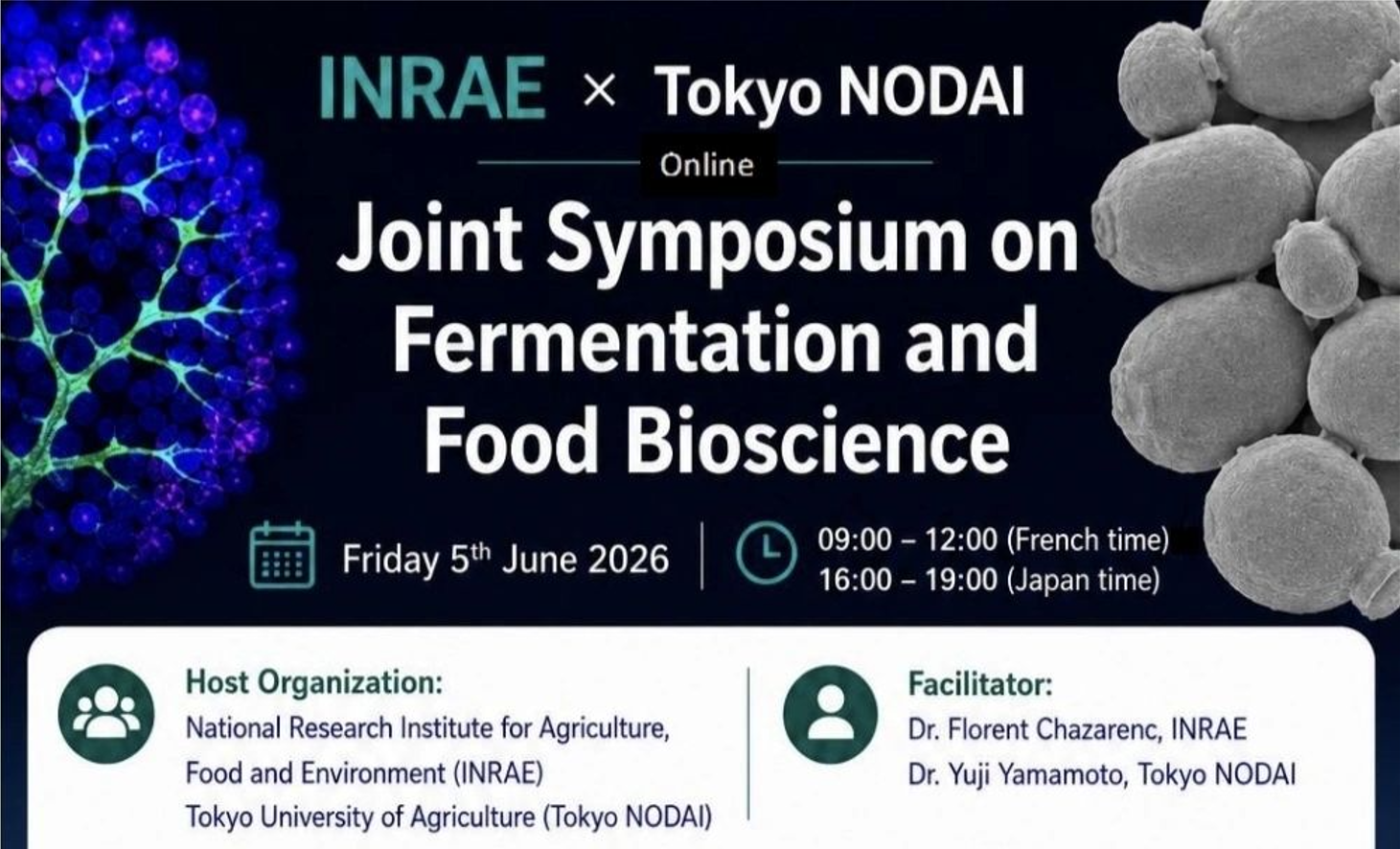
INRAE Tokyo NODAI Joint Symposium on Fermentation and Food Bioscience
Jun 05, 2026
On June 5, 2026, Julien Tap participated in the INRAE-Tokyo NODAI Joint Symposium on Fermentation and Food Bioscience. This online event brought together researchers from INRAE and the Tokyo University of Agriculture to discuss fermentation microbiology, food bioscience, taste, and microbiome-based approaches to health. More than 100 participants attended the symposium, most of them Japanese students, highlighting the strong interest of the next generation in fermentation and microbiome science.
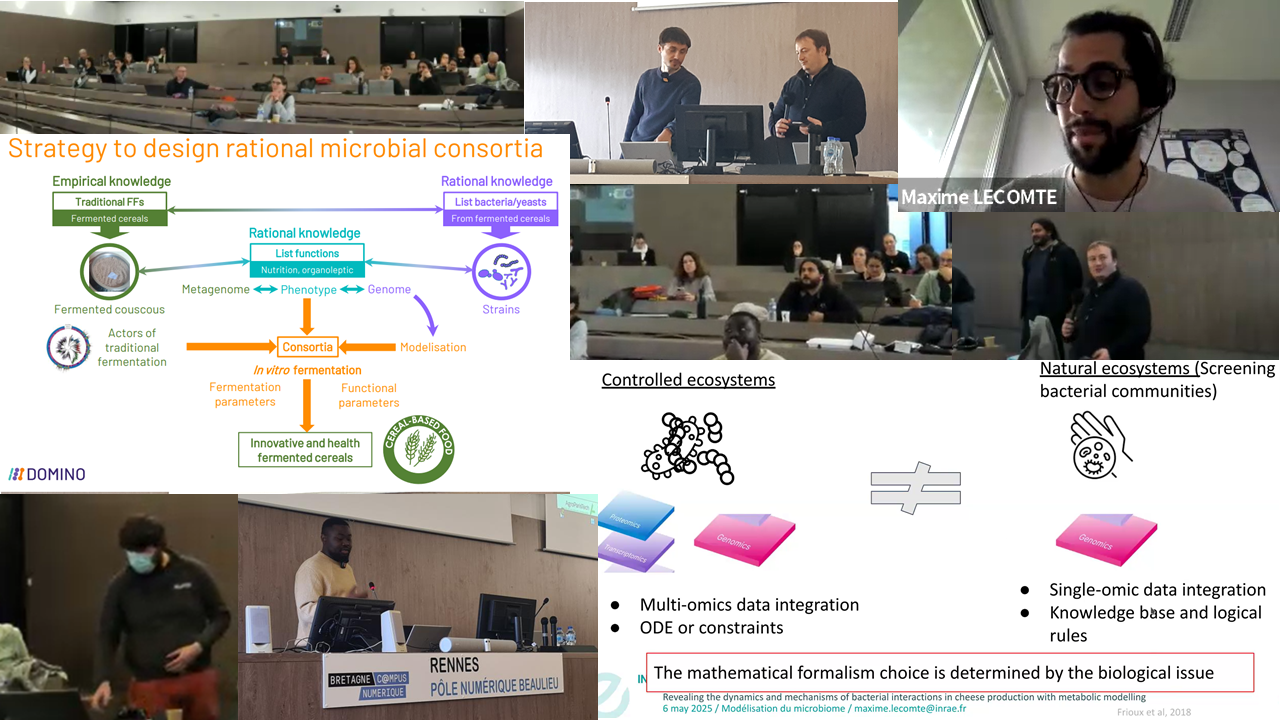
Focus on Microbial Ecology Modelling at the NEM days meeting in Rennes
May 06, 2025
The French NEM (Nutrition & Microbial Ecosystems) network hold its annual meeting this last two days (5th – 6th of May) in Rennes. Julien Tap, researcher from the FME lab presented the first results of his Ferment du Future SynthPlex project and how Engineering food microbial consortia can be performed using microfermentors to reveal strain epistasis. With the Support of Holoflux and Digit-Bio INRAE Metaprogram, He also co-organized with Guillaume Gautreau from the MaIAge Unit a specific workshop on modelling of microbial ecosystems.