Published: Jun 5, 2026 by FME Lab
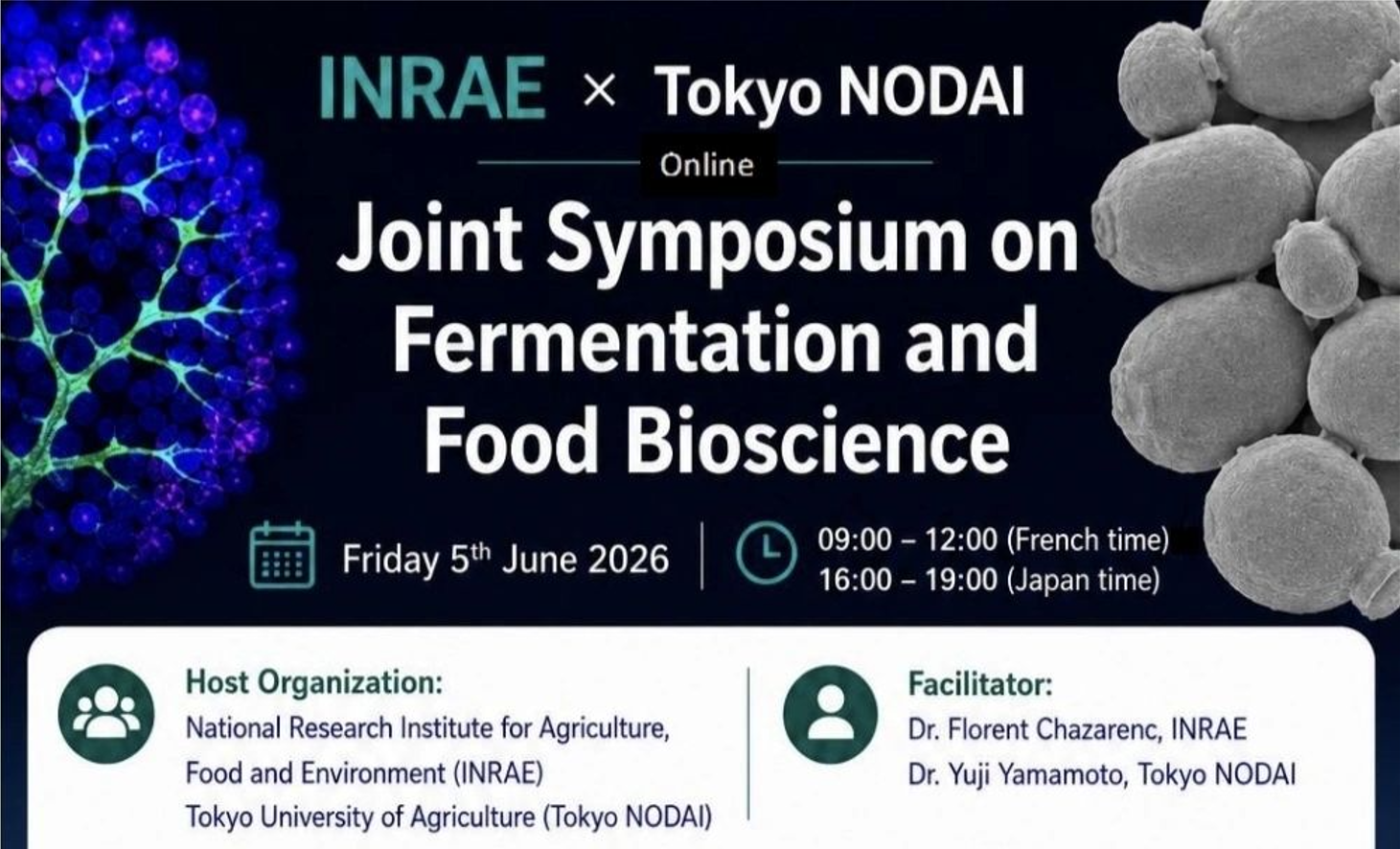
On June 5, 2026, Julien Tap participated in the INRAE-Tokyo NODAI Joint Symposium on Fermentation and Food Bioscience. This online event brought together researchers from INRAE and the Tokyo University of Agriculture to discuss fermentation microbiology, food bioscience, taste, and microbiome-based approaches to health. More than 100 participants attended the symposium, most of them Japanese students, highlighting the strong interest of the next generation in fermentation and microbiome science.
Julien’s presentation, “Next-Gen Fermented Food: Harnessing Gut Microbiome Diversity and Functions,” focused on a major challenge for nutrition and microbiome research: people do not all have the same gut microbiome and may therefore respond differently to the same dietary intervention or fermented food.
Large population studies show that measured host and environmental factors explain less than 20% of the variation in gut microbial composition. Diet and lifestyle remain important, but they are only part of the picture. Stochastic processes and ecological rules also contribute to the assembly and evolution of each person’s microbial ecosystem.
Julien highlighted microbiome resilience as a particularly important concept. Throughout life, the gut microbiome can experience dietary changes, medication, illness, and other disturbances. Its capacity to resist these pressures or recover from them helps maintain its structure and functions. Understanding this resilience is therefore essential when seeking to modulate the microbiome through food.
The symposium was also an opportunity for Julien to present preliminary results from the MicroEngine project. These results contribute to understanding how microbial ecosystems and their functions can be harnessed to support microbiome engineering between fermented foods and the gut. This work complements the broader ambitions of DOMINO and the Ferments du Futur Grand Challenge to develop healthy, sustainable, and scientifically grounded fermented-food innovations.
The central message was that the development of next-generation fermented foods should move beyond a one-size-fits-all approach. Their design should consider:
- the diversity of gut microbiome states across individuals;
- the ecological processes that structure microbial communities;
- the functions carried by these communities, not only their composition;
- and the resilience that shapes individual responses over time.
This ecological and functional framework can help guide the development of more targeted, effective, and sustainable fermented foods. It also strengthens the connection between population-scale gut microbiome research and food microbial ecology, two complementary areas at the heart of the FME team’s research.
The symposium also included presentations on sake yeasts, microbiome-driven strategies for health and treatment response, and taste-cell organoids for studying umami. Together, these contributions illustrated the value of French-Japanese scientific cooperation for advancing fermentation and food bioscience.
Source: INRAE-Tokyo NODAI Joint Symposium announcement on LinkedIn