+33 1 34 65 21 06
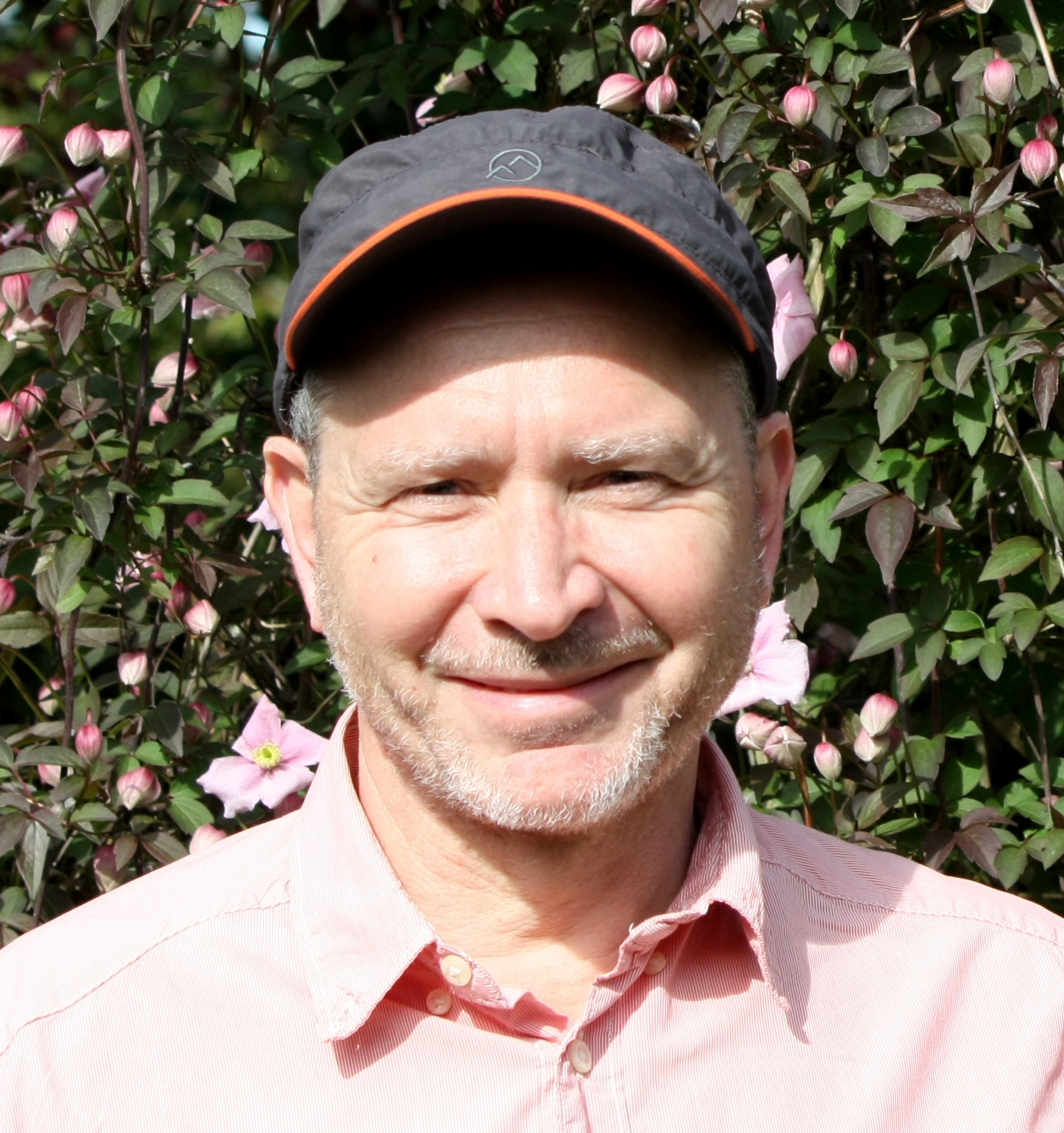
Stéphane Chaillou
Research Director
RESEARCH & ACADEMIC CAREER
Stephane’s research work is focusing on genomics of food-borne bacteria and on the role of microbial diversity in food microbial ecology. One of his strategy is to implement statistical and bioinformatic analysis of large sampling survey for describing diversity of food microbiomes. He is using the prediction of microbiomes fluxes along the food chain to assess food health and sustainability issues link to microbiomes such as food spoilage, biopreservation or fermentation. Recently, he has been implementing meta-omics data analysis to characterize microbial metabolic interactions in foods using synthetic ecology strategies. Stephane studied fundamental & applied microbiology in Marseilles (France) and earned his PhD (1999) in molecular microbiology at the University of Amsterdam (The Netherlands). In 2016, Stephane obtained his HDR (French accreditation to steer & supervise research) in biological sciences at University Paris-Saclay.
TEACHING & ACADEMIC COORDINATION ACTIVITIES
At the Paris-Saclay University, in the framework of the BioSphera graduate school, Stephane’s is also coordinating activities to interface research & education programs and co-supervise a master degree in the field of microbiome sciences. In this context, Stéphane teaches metagenomics and molecular ecology to students having genomic and microbiology backgrounds.
CURRENT MAJOR RESEARCH PROJECTS (COORDINATION)
- 2023-2028: Horizon Europe DOMINO project (RIA). Harnessing the microbial potential of fermented foods for healthy and sustainable food systems.
- 2022-2025: ANR (French National Agency) METASIMFOOD project. Improving the quality, safety and sustainability of fermented vegetable food and fruit beverage using a knowledge-driven synthetic ecology and modelling approach.
- 2021-2025: EMOVOL. Molecular microbial ecology of poultry meat production.
Last related news
Feb 24, 2026
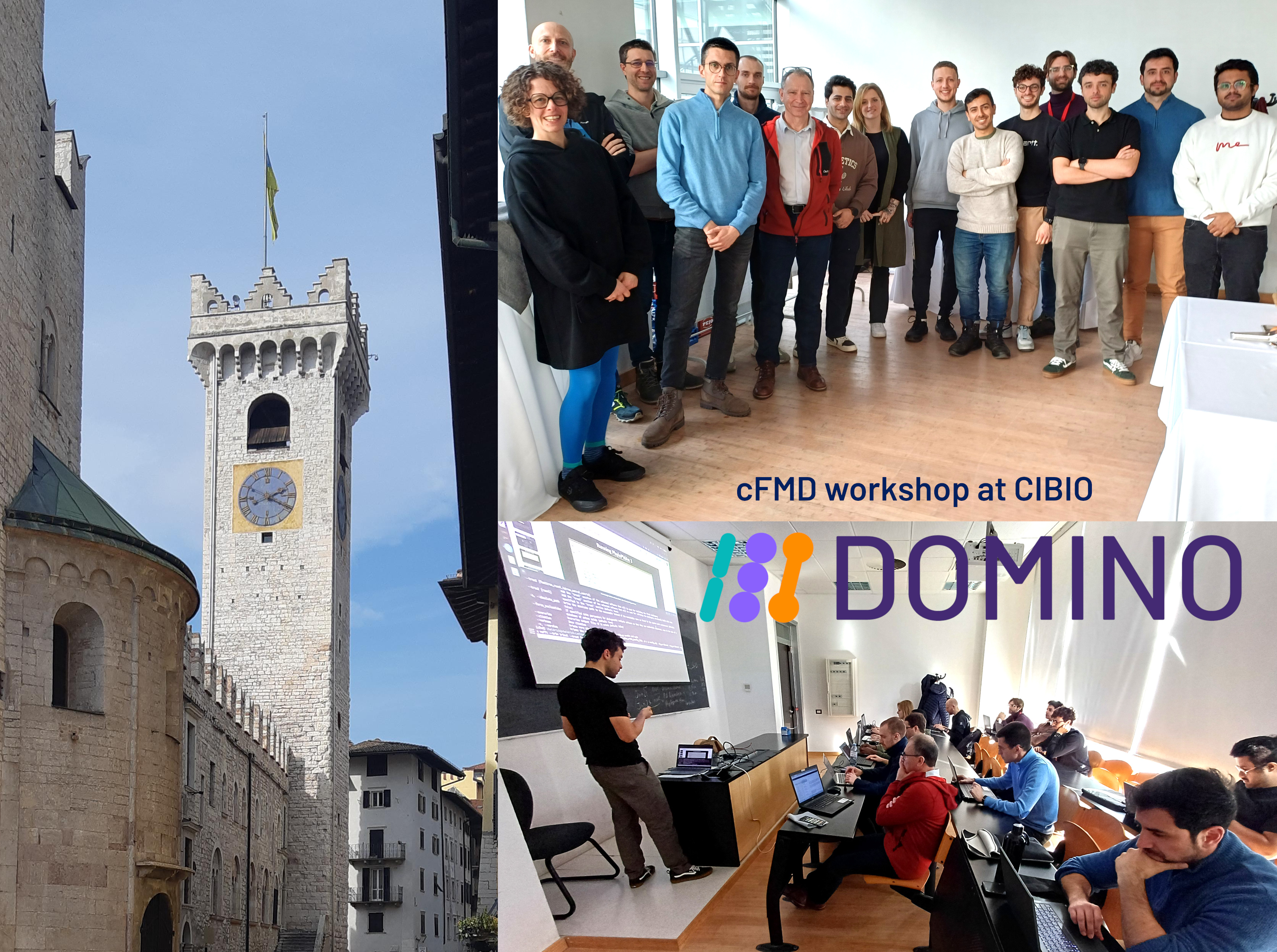
Last February 23-24th 2026, at University of Trento, a workshop was organized by the CIBIO (Nicola Segata’s lab) for #DominoEU partners. The workshop aimed at learning to query & analyse data from the Curated Food Microbiome Database (cFMD). Thanks to the very efficient and skilled teaching team (vitor Heidrich, Hrituraj Dey, Francesco aniscar, Sergio Andrés Castañeda Garzon) and for the incredible hospitality of Frederica Pinto and Nicola Segata.
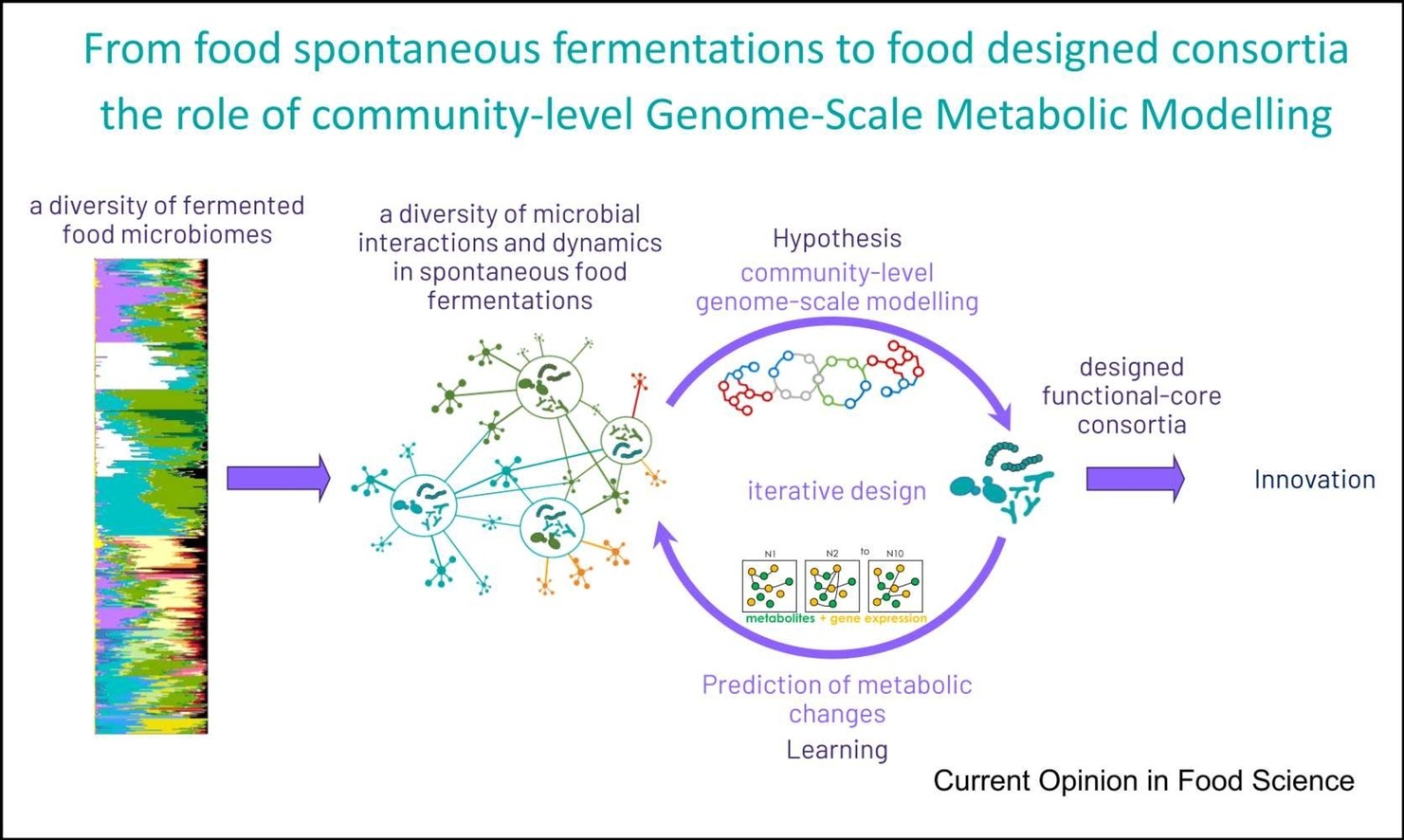
From food spontaneous fermentations to food designed consortia
Dec 08, 2025
Our new article entitled “Microbiome metabolic modeling as a tool for innovation in fermented foods” has been published in in Current Opinion of Food Science1.
-
Elham Karimi, Julien Tap, Marie-Christine Champomier-Vergès, Stéphane Chaillou. Microbiome metabolic modeling as a tool for innovation in fermented foods. Current Opinion of Food Science. 2025 ↩
The FME lab communicates about the links between the microbiome, nutrition and health.
Dec 01, 2025
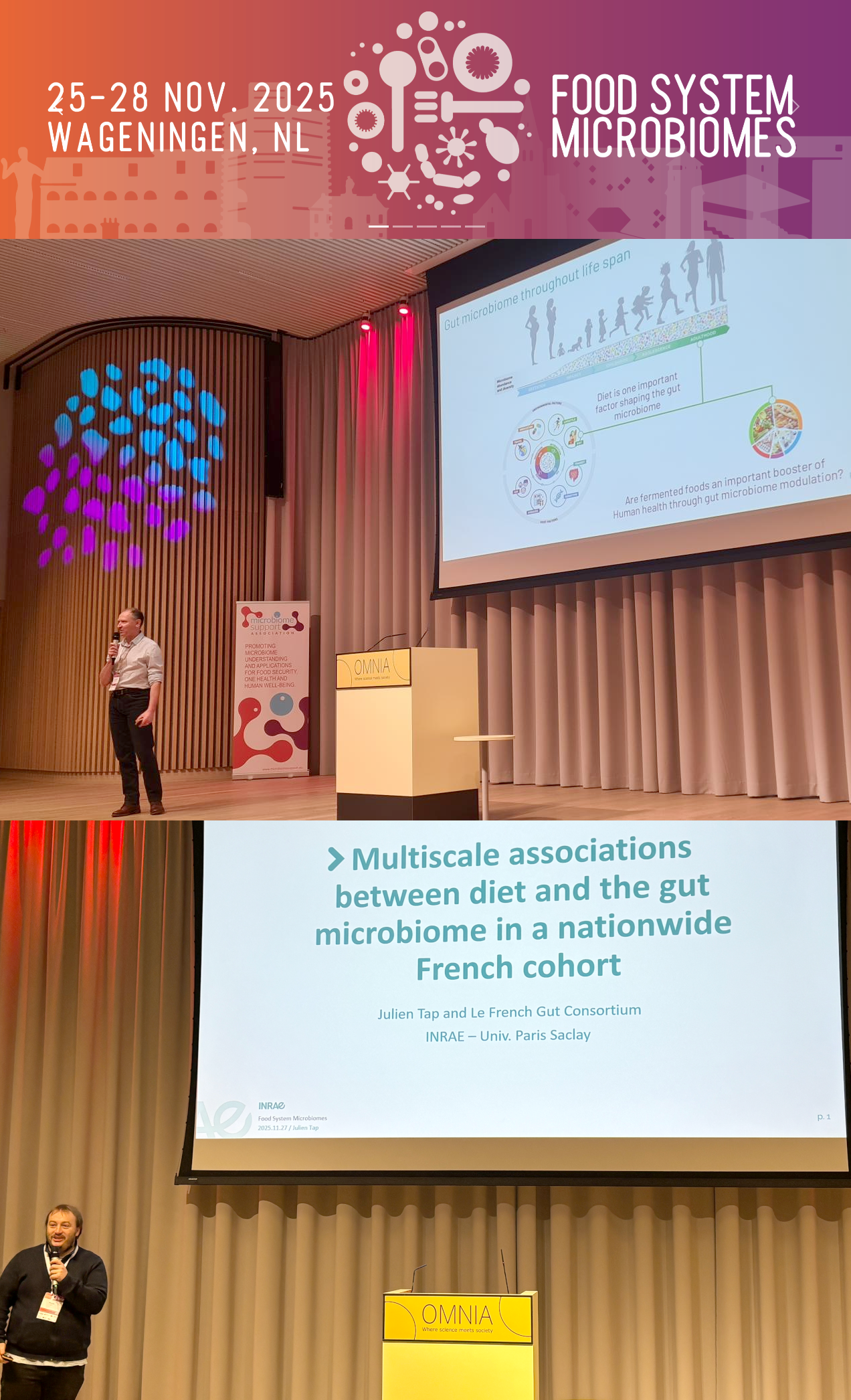
On Thursday 27 November, the FME lab took part in the Food System Microbiomes Conference in Wageningen during the session dedicated to the connections between microbiomes, nutrition and health. The session was co-chaired by Stéphane Chaillou (INRAE, Micalis) and Prof. Christophe Courtin (KU Leuven), and provided an opportunity to showcase advances from two major European projects: DOMINO and HealthFerm.