From food spontaneous fermentations to food designed consortia

Published: Dec 8, 2025 by FME Lab

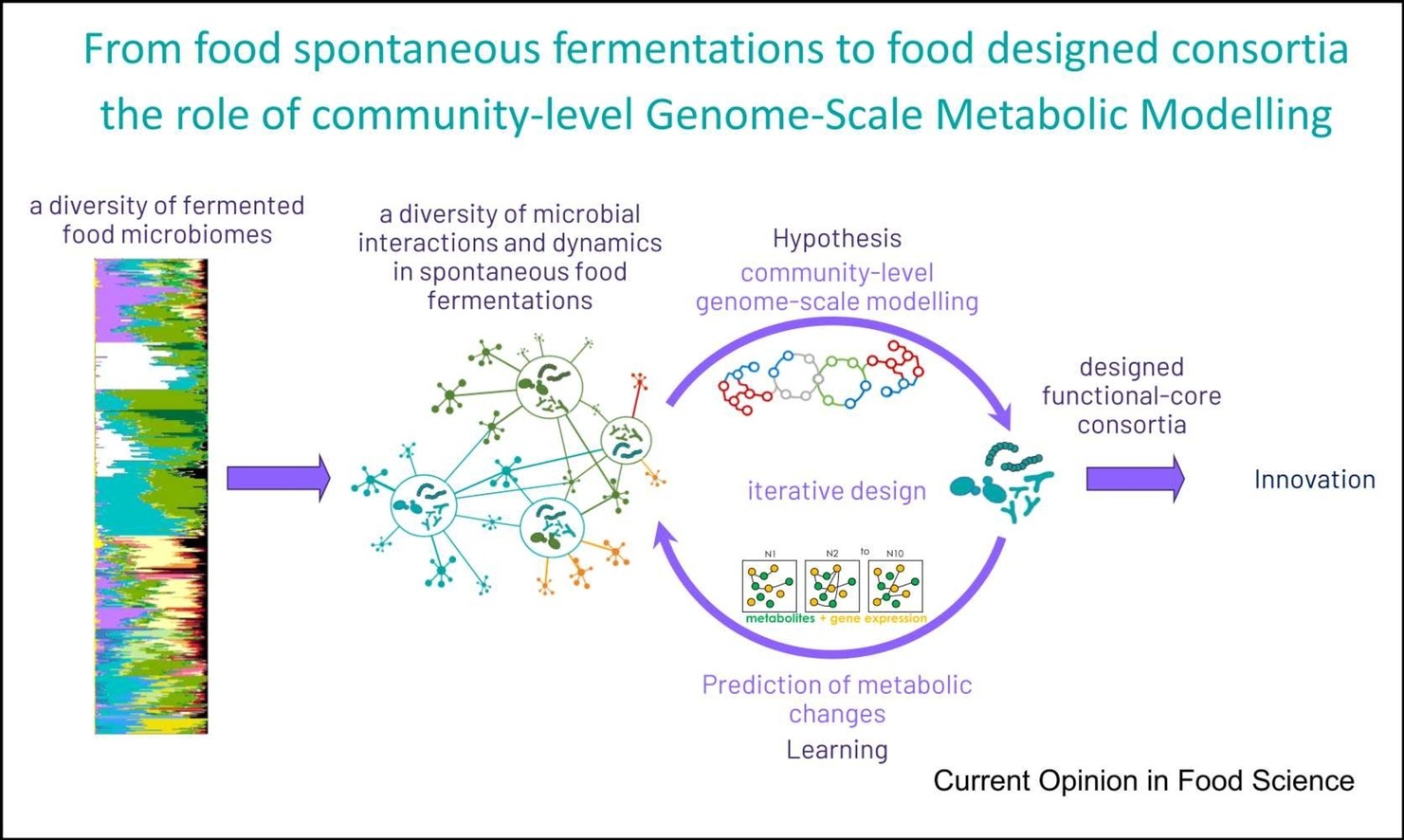
Our new article entitled “Microbiome metabolic modeling as a tool for innovation in fermented foods” has been published in in Current Opinion of Food Science1.

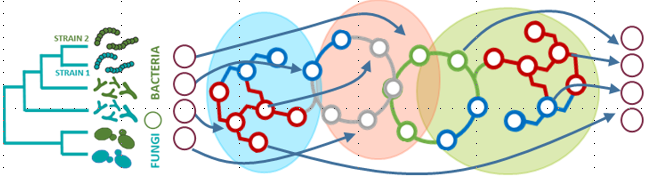
This review focuses on community-level genome or metagenome-scale metabolic modeling as a strategy to rationalize and predict microbial interactions in food. We underline its power as a cornerstone in comprehensive and rational strategies for optimization of microbial consortia assembly, whether they are used in bottom-up or top-down approaches.
A specific thanks to Elham Karimi, postdoc in the FME lab, who brought this discipline into the scope of our research group and which we now apply in many of our projects, including in the ANR metasimfood project and the European #DominoEU project.

  1. Elham Karimi, Julien Tap, Marie-Christine Champomier-Vergès, Stéphane Chaillou. Microbiome metabolic modeling as a tool for innovation in fermented foods. Current Opinion of Food Science. 2025 

Share

Latest Posts

DOMINO 3rd annual meeting in Madrid

After three years, the #DominoEU project has reached full speed, with significant results across all project objectives. The three-day meeting provided an opportunity to review the very busy year of 2025 and the many key findings that can be leveraged in the coming months.

DOMINO Workshop on F3M Food Microbiome Metabolic Modules at CSIC Madrid

The 14th of April 2026, teams from INRAE (MICALIS & MaIAGE) organised a hands-on workshop in Madrid at CSIC, focused on the F3M ecosystem (Food Microbiomes Metabolic Modules) and its associated tools for functional microbiome analysis.

FME at Bioket 2026 advancing synthetic microbial ecology for sustainable food

At the BIOKET (Bioeconomy Key Enabling Technologies) conference in Fribourg, Julien presented recent advances from the SynthPlex project, positioning synthetic microbial ecology as a core tool for next-generation fermented foods.