Published: Jul 4, 2024 by FME Lab
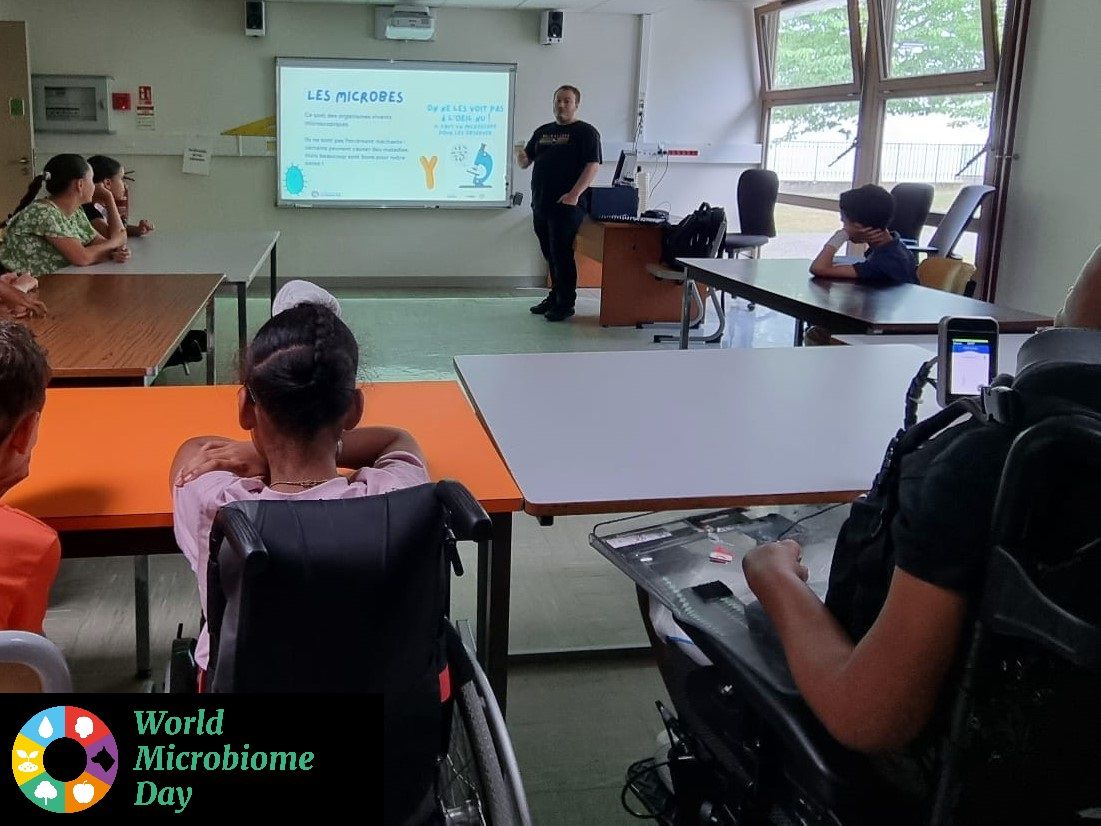
In a unique venture celebrating World Microbiome Day, we organized a series of engaging microbiology workshops at Toulouse-Lautrec Primary School in Vaucresson and another primary school in the southern suburbs of Paris. These workshops aimed to teach children about microbiomes, fermented foods, and the importance of gut health through interactive and hands-on experiences.
At Toulouse-Lautrec Primary School, we had the pleasure of working with children with disabilities. The session was filled with exciting activities that captivated their attention and curiosity. We explored different microbiomes, discussed the benefits of fermented foods, and highlighted the significance of the gut microbiome.
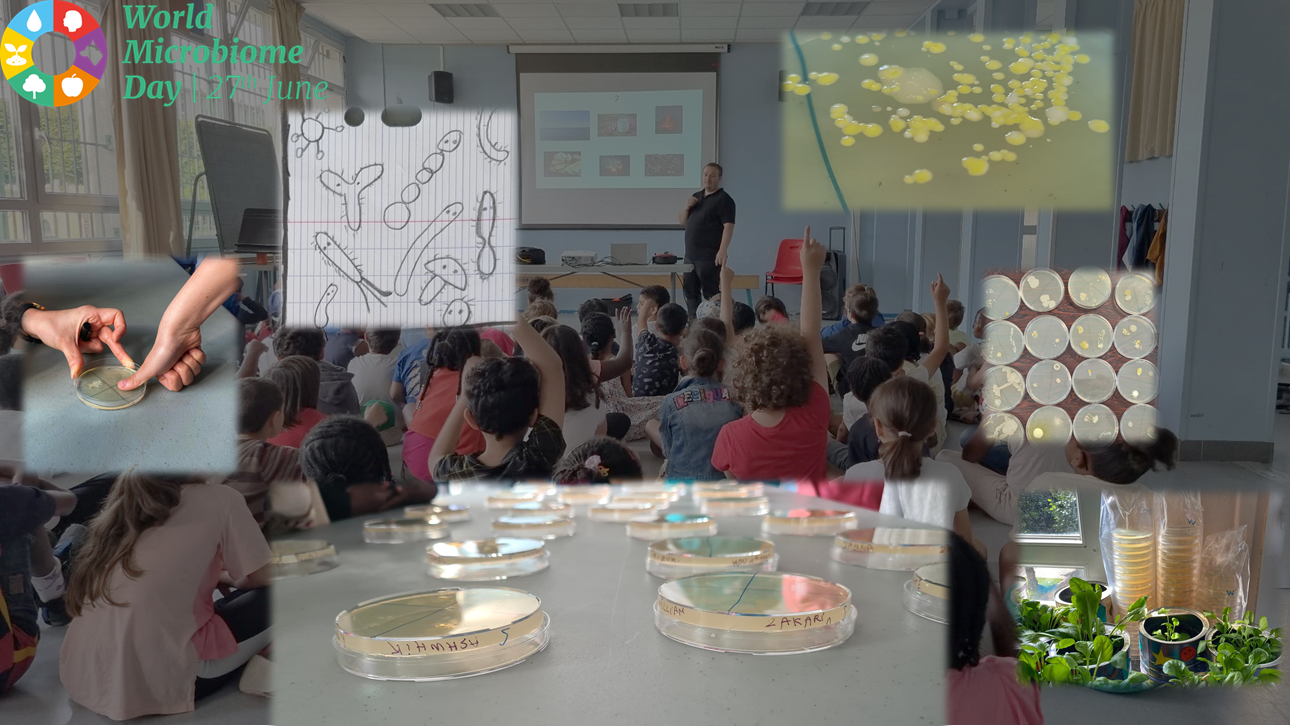
One of the workshop’s highlights was exploring the children’s cultivable skin microbiome using Petri dishes. The students pressed their hands onto agar plates, revealing the unseen world of microbes living on their skin. This hands-on activity was both educational and thrilling, sparking a keen interest in science among the young participants. Following the success at Vaucresson, we extended the workshop to three classes of CE1/CE2 students in another primary school. The challenge here was to engage a larger group of young minds, but the enthusiasm of the students made it a memorable experience.
Highlights of the Workshop:
-
Discovering Different Microbiomes: We introduced the concept of microbiomes and explained their presence in various environments.
-
Learning about Fermented Foods: The children learned how microbes transform foods into delicious fermented products like yogurt and sauerkraut.
-
Hands-on Petri Dish Experiments: Using 40 Petri dishes, we conducted an experiment to explore the skin microbiome and test everyday objects from the children’s daily lives.
-
Observing Microbial Growth: The children eagerly awaited the results, discovering the fascinating growth patterns of microbes a few days later.
The highlight of the session was testing unusual objects from the children’s daily routines, such as their school supplies and personal items. The results were both surprising and educational, providing a vivid demonstration of the ubiquitous nature of microbes. The children’s excitement and joy were palpable as they participated in the experiments and eagerly anticipated the microbial growth results. Their engagement and curiosity underscored the importance of making science accessible and enjoyable for all.
Special thanks to the PhylHom team, French gut team and MIMA2 platform for making these workshops a success.