Published: Dec 1, 2025 by FME Lab
On Thursday 27 November, the FME lab took part in the Food System Microbiomes Conference in Wageningen during the session dedicated to the connections between microbiomes, nutrition and health. The session was co-chaired by Stéphane Chaillou (INRAE, Micalis) and Prof. Christophe Courtin (KU Leuven), and provided an opportunity to showcase advances from two major European projects: DOMINO and HealthFerm.
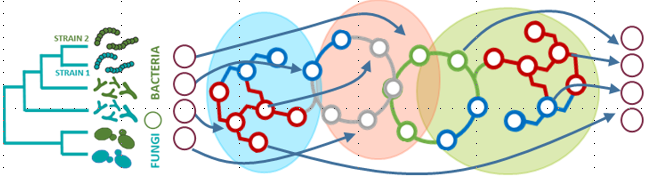
Stéphane Chaillou opened the session with an overview of the complex relationships linking fermented foods, gut microbiome modulation, and human health, presenting recent evidence on the variability of individual responses and the need for integrated approaches combining top-down and bottom-up strategies. His talk highlighted how microbial diversity in fermented foods and differences in clinical designs contribute to heterogeneous outcomes, and how innovative frameworks—including microfluidics, organoid systems, and metabolic modelling—can guide fermented-food microbiome engineering for health
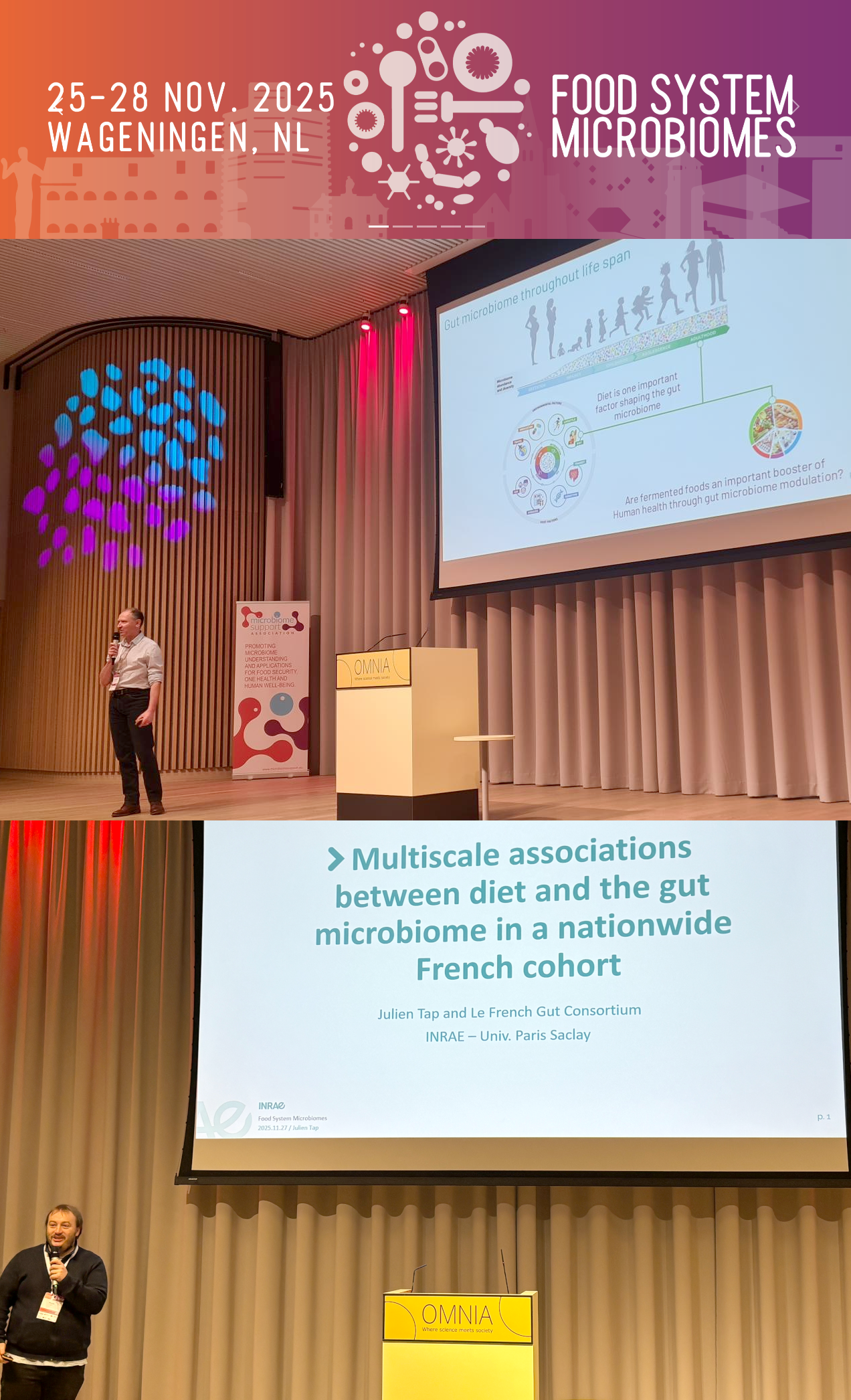
Julien Tap then presented new results from the French Gut cohort, illustrating how large-scale shotgun metagenomics combined with extensive dietary and lifestyle metadata reveal ecological branches of the gut microbiome across the French population. These branches capture gradients of diversity, diet quality, and lifestyle, and can be predicted using questionnaire data. Julien also showed how dietary patterns themselves form branch-like structures associated with gut diversity, and how food exposome signatures (e.g., residual DNA) complement questionnaires to refine diet–microbiome analyses