Published: Jun 15, 2026 by FME Lab
Stéphane Chaillou participated in a joint reflection with a group of international researchers, coordinated by the Austrian Institute of Technology (AIT), on the terminology used to describe certain microbial communities. The collective of experts proposes replacing the term “synthetic community” (or SynCom), sometimes perceived negatively, with “Defined Microbial Community”.
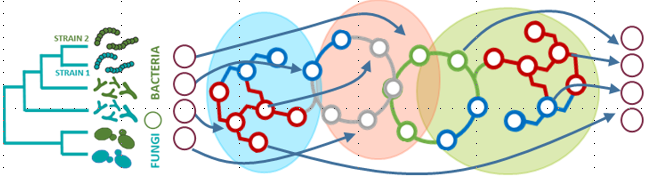
SynComs are assemblies of microscopic organisms cultivated in the laboratory to study interactions between microbes and hosts (plants, animals or humans) or to develop concrete solutions such as microbial fertilizers, fermenting agents, probiotics or biopesticides. The word “synthetic” can be confusing, as it is associated with synthetic biology and genetic manipulation, whereas most of these communities are composed of naturally occurring, unmodified strains.
By adopting a more neutral and precise terminology, scientists hope to:
• facilitate public understanding and strengthen confidence in products that use microbiomes;
• harmonise communication practices across different sectors (agriculture, health, food, environment);
• simplify regulatory procedures, particularly in Europe where the legislation for “consortia of microorganisms” (Regulation 2019/1009) already accepts defined assemblies.
Recent studies already show that well‑characterised communities can increase crop resilience to stresses (drought, pathogens) and improve human health; for example, consortia of intestinal bacteria are being tested as alternatives to traditional probiotics. Thus, moving from “synthetic” to “Defined Microbial Community” could accelerate the development of sustainable microbiological solutions while avoiding the prejudice attached to the word “synthetic.”
Source : Read the article in Nature Communications
Related project: DOMINO