School of Artificial Intelligence Applied to Microbiomes

Published: Oct 1, 2025 by FME Lab

Earlier this month, Julien had the pleasure of participating as a lecturer at the School of Artificial Intelligence Applied to Microbiomes, hosted at AgroParisTech and organized by Aristeidis Litos, Daniel Garza, and Ariane Bize. The event brought together an exceptional group of researchers and students exploring how AI, data science, and mathematical modeling are reshaping our understanding of microbial ecosystems.
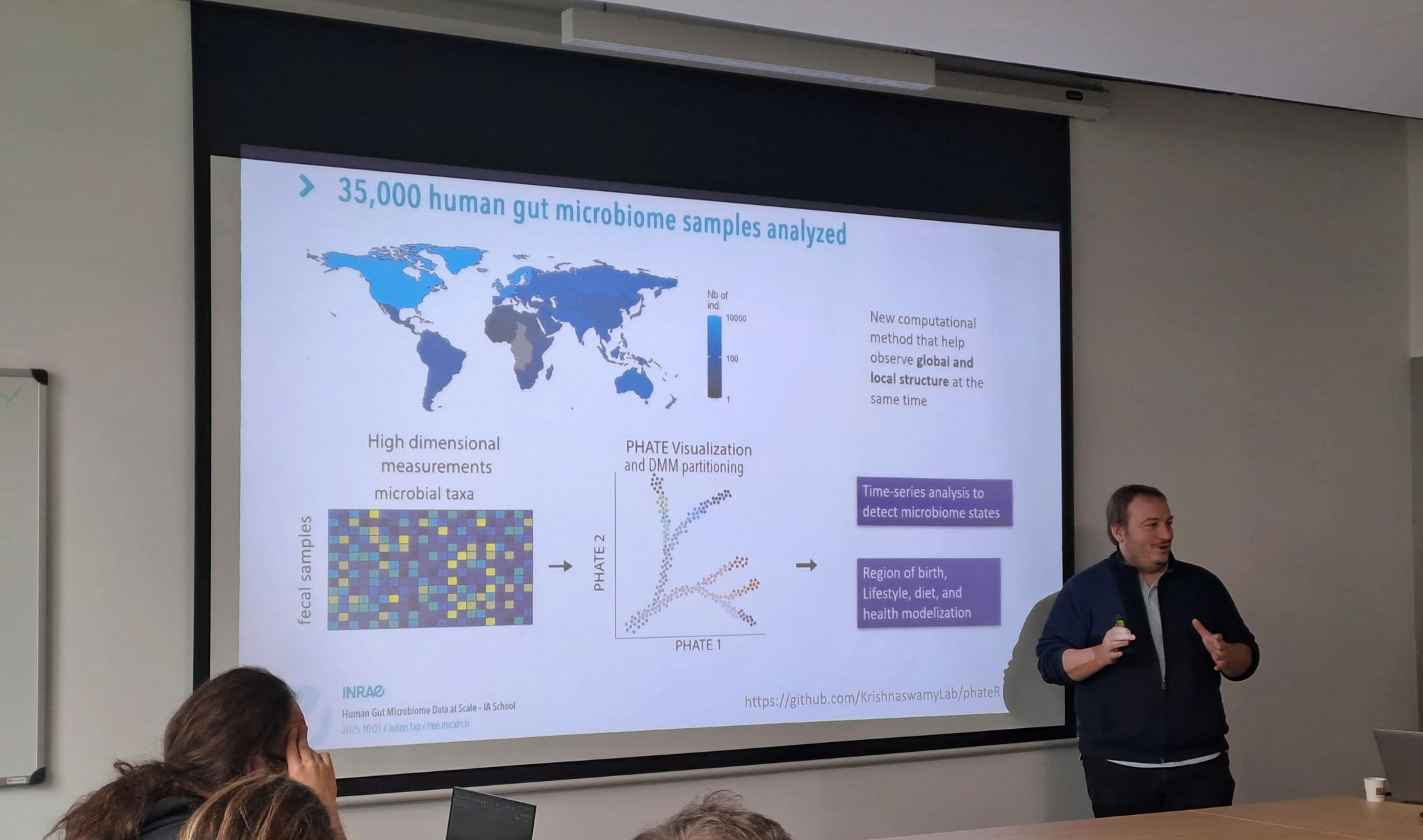
In his lecture1, Julien discussed how large-scale metagenomic datasets—integrating taxonomic, functional, clinical, and nutritional dimensions—can help bridge high-dimensional data with ecological meaning. By examining tens of thousands of gut microbiome samples, we can uncover branching ecological states that describe how lifestyle, diet, and physiology shape microbial diversity. These ecological transitions not only reflect resilience and degradation dynamics but also offer a foundation for precision nutrition and the design of next-generation fermented foods.

A warm thank you to the organizers, speakers, and participants. It’s exciting to see how this field continues to grow, blending theory, computation, and experimentation toward a deeper understanding of microbiomes.

  1. Julien Tap. Integrating Human Gut Microbiome Data at Scale: From Individuals to Multi-Layered Features in Clinical and Nutritional Studies. School of Artificial Intelligence Applied to Microbiomes: data analysis, modelling, and engineering of microbiome-based biotechnologies, Université Paris-Saclay, Oct 2025, Palaiseau, France. (hal-05312010) 

Share

Latest Posts

From “synthetic” to defined microbial communities for clearer terminology

Stéphane Chaillou participated in a joint reflection with a group of international researchers, coordinated by the Austrian Institute of Technology (AIT), on the terminology used to describe certain microbial communities. The collective of experts proposes replacing the term “synthetic community” (or SynCom), sometimes perceived negatively, with “Defined Microbial Community”.

Harnessing gut microbiome diversity for next-generation fermented foods

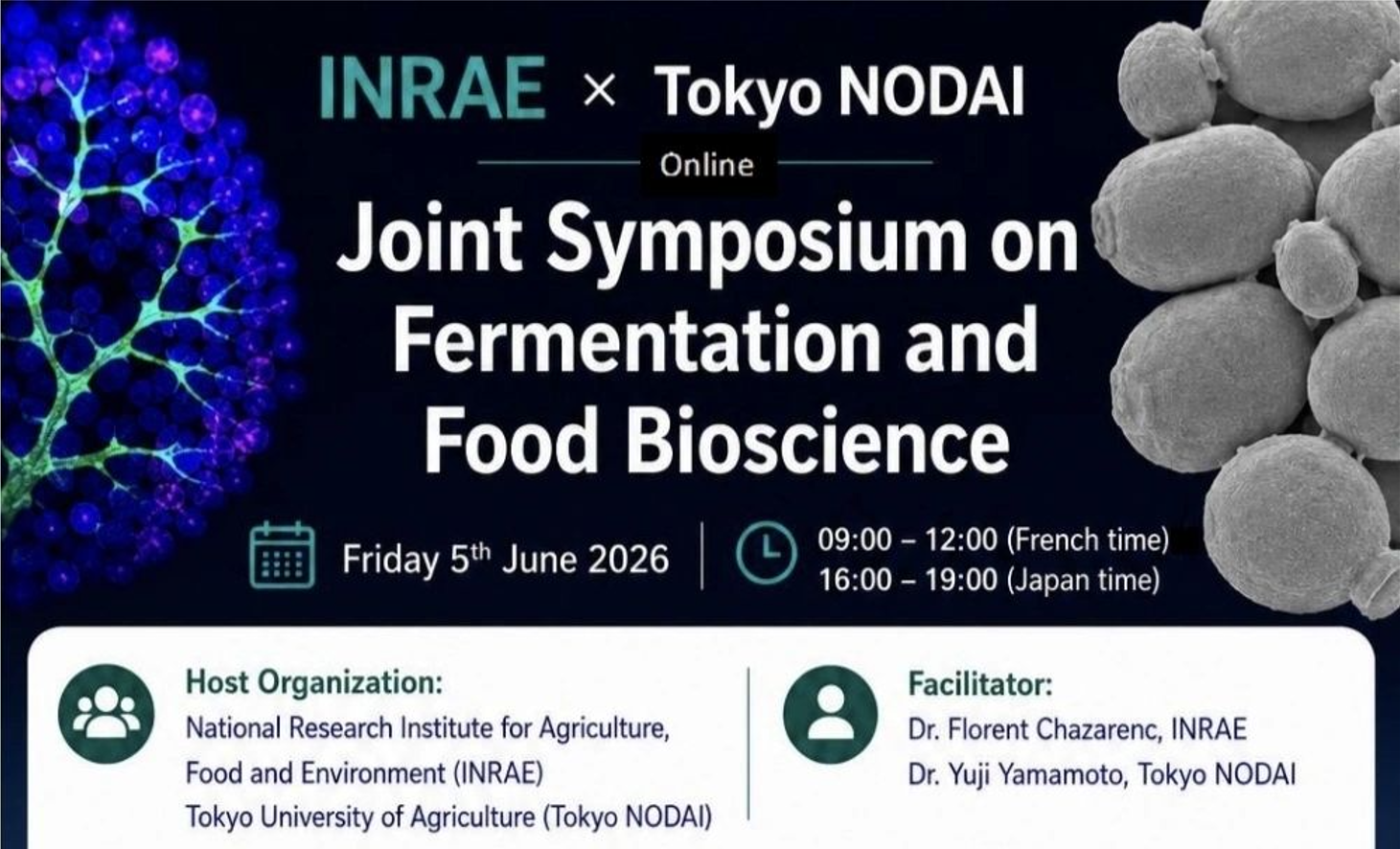
On June 5, 2026, Julien Tap participated in the INRAE-Tokyo NODAI Joint Symposium on Fermentation and Food Bioscience. This online event brought together researchers from INRAE and the Tokyo University of Agriculture to discuss fermentation microbiology, food bioscience, taste, and microbiome-based approaches to health. More than 100 participants attended the symposium, most of them Japanese students, highlighting the strong interest of the next generation in fermentation and microbiome science.

DOMINO 3rd annual meeting in Madrid

After three years, the #DominoEU project has reached full speed, with significant results across all project objectives. The three-day meeting provided an opportunity to review the very busy year of 2025 and the many key findings that can be leveraged in the coming months.