The relationship between diet and the gut microbiome lies at the heart of both health and sustainability challenges. Understanding how dietary habits shape microbial diversity is key to developing new strategies for precision nutrition.
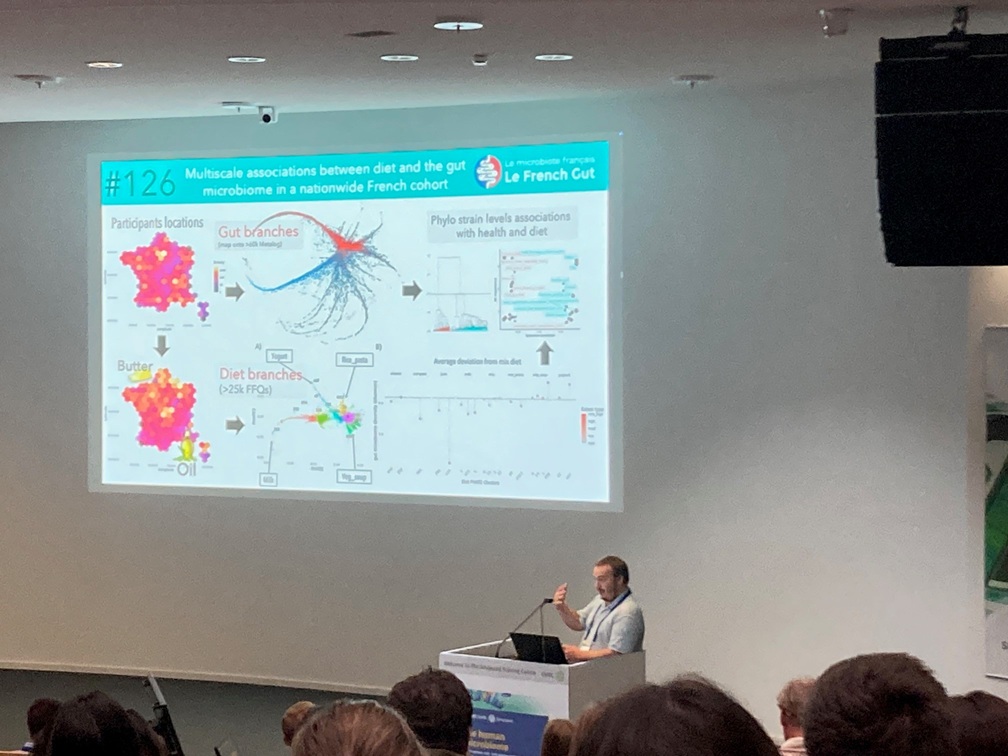
The French Gut at EMBL Human Microbiome Symposium 2025
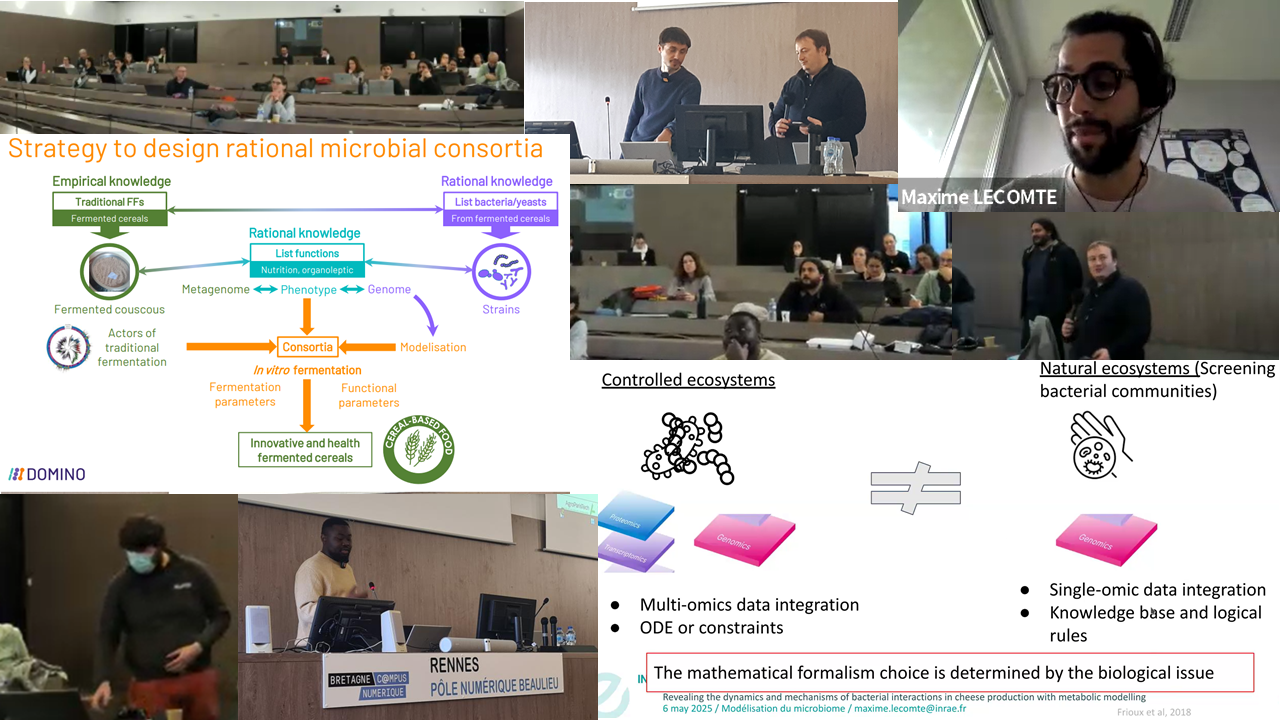
Focus on Microbial Ecology Modelling at the NEM days meeting in Rennes
The French NEM (Nutrition & Microbial Ecosystems) network hold its annual meeting this last two days (5th – 6th of May) in Rennes. Julien Tap, researcher from the FME lab presented the first results of his Ferment du Future SynthPlex project and how Engineering food microbial consortia can be performed using microfermentors to reveal strain epistasis. With the Support of Holoflux and Digit-Bio INRAE Metaprogram, He also co-organized with Guillaume Gautreau from the MaIAge Unit a specific workshop on modelling of microbial ecosystems.
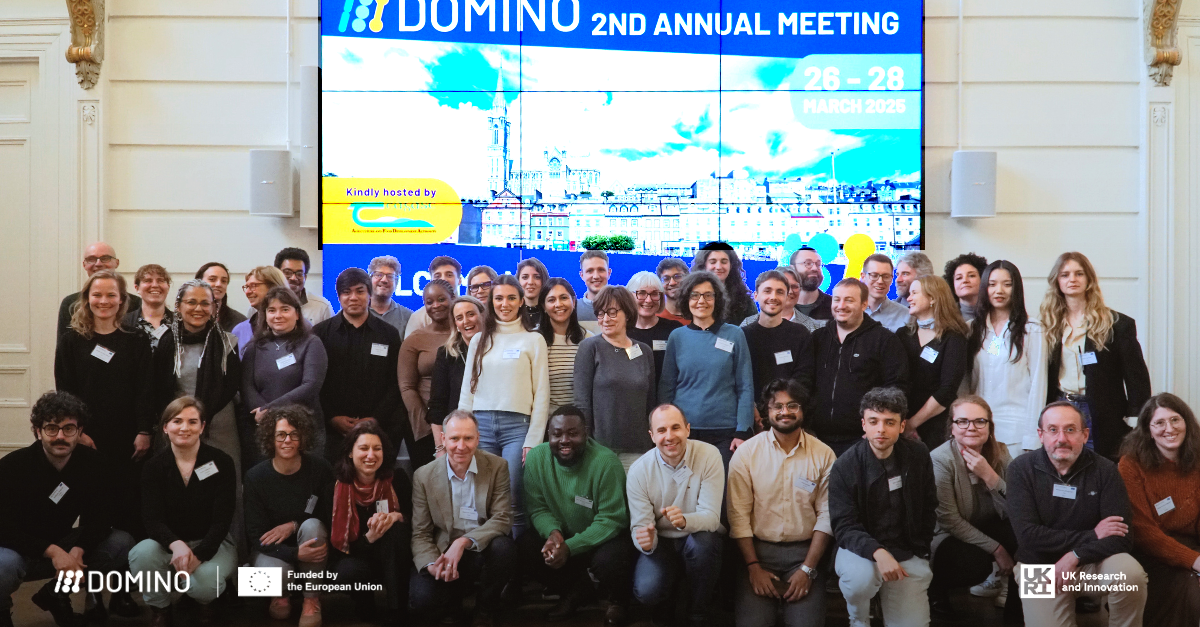
Lovely second annual meeting of DOMINO project in Cork, Ireland
The DOMINO project held its second annual meeting from 26 to 28 March in the picturesque city of Cork, Ireland. It was an intense and warm moment thanks to the efficient and very friendly organisation of Teagasc and its incredible team coordinated by Orla O’Sullivan and John Kenny.
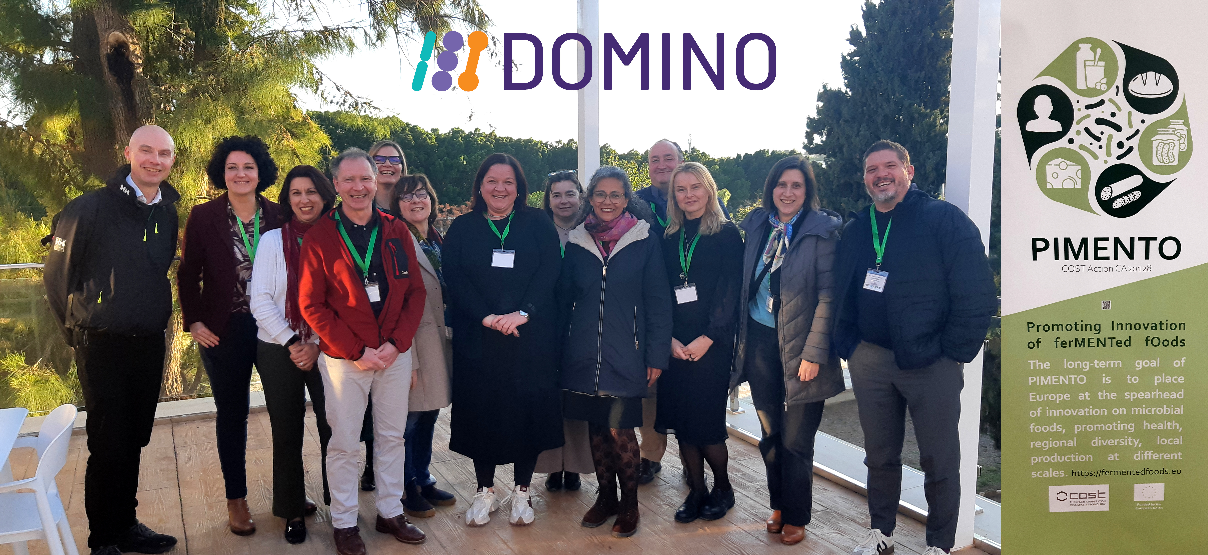
Health promoting effects of Fermented Foods was the highlight at 2nd Forum on Fermented Foods in Malaga
#DominoEU researchers participated significantly to this amazing conference organised by the COST Pimento. Paul Cotter, Orla O’Sullivan, Jekaterina Kansatseva, Bastien Renard, Isabelle Savary-Auzeloux, Luca Cocolin, Kelly Rantsiou and Tanja Kostic gave talks.
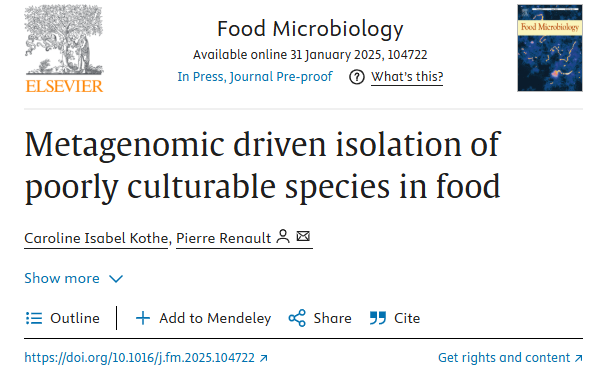
Metagenomic driven isolation of poorly culturable species in food
A new article entitled “Metagenomic driven isolation of poorly culturable species in food” from Caroline and Pierre has been published in Food microbiology journal1.
-
Kothe et al. *Metagenomic driven isolation of poorly culturable species in food. Food Microbiology. 2025 ↩
Latest Posts
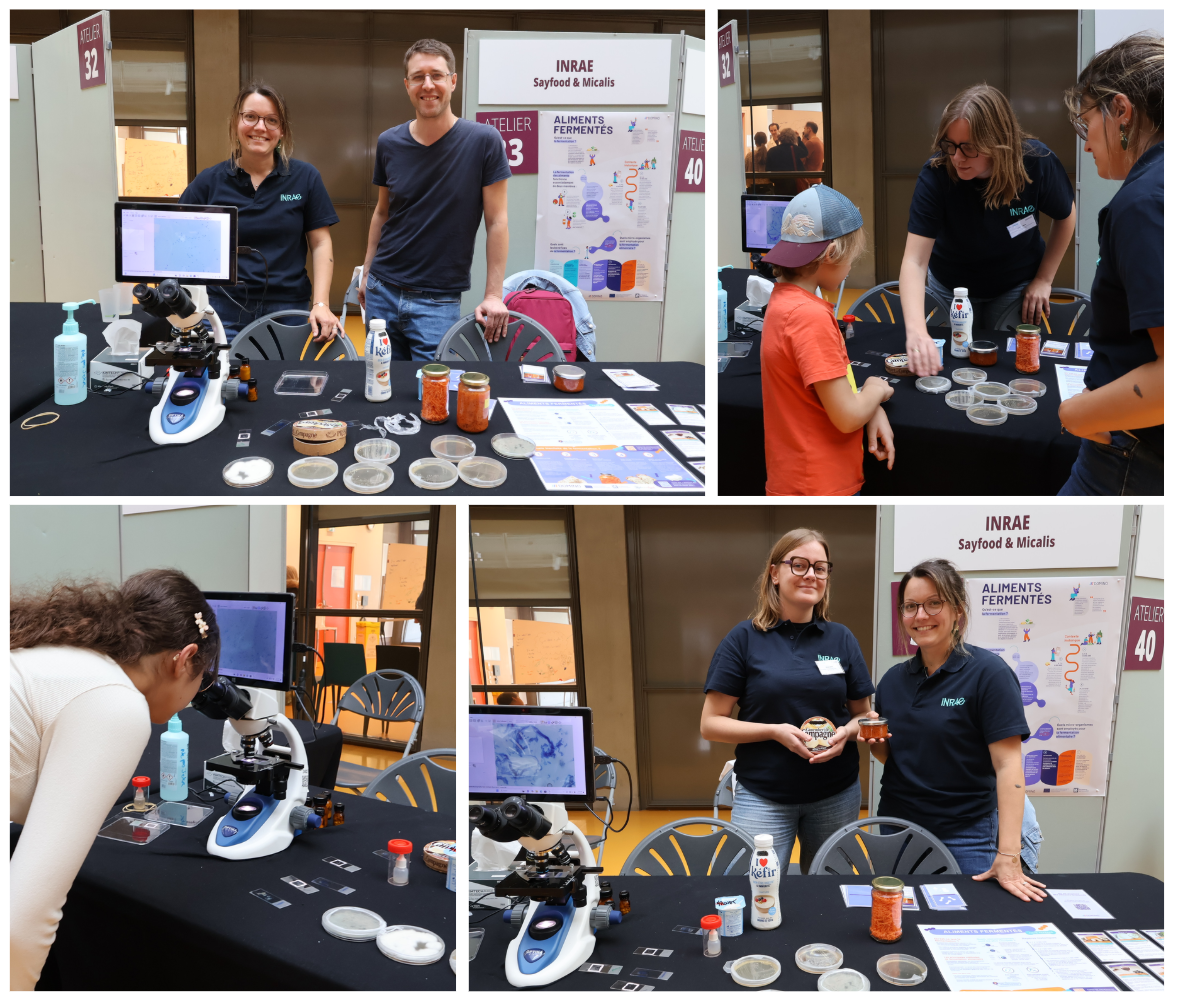
Fermented foods at the Fête de la science Paris-Saclay 2026
On October 3–4, 2026, Stéphane Chaillou and Alice Lima took part in the Village des sciences at ENS Paris-Saclay for the Fête de la science, France’s annual science festival. This year’s theme, “Saveurs savantes”, invited visitors to explore the science behind food and flavour.
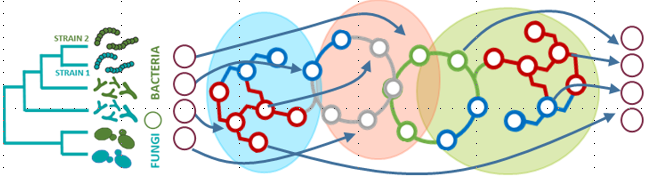
From “synthetic” to defined microbial communities for clearer terminology
Stéphane Chaillou participated in a joint reflection with a group of international researchers, coordinated by the Austrian Institute of Technology (AIT), on the terminology used to describe certain microbial communities. The collective of experts proposes replacing the term “synthetic community” (or SynCom), sometimes perceived negatively, with “Defined Microbial Community”.
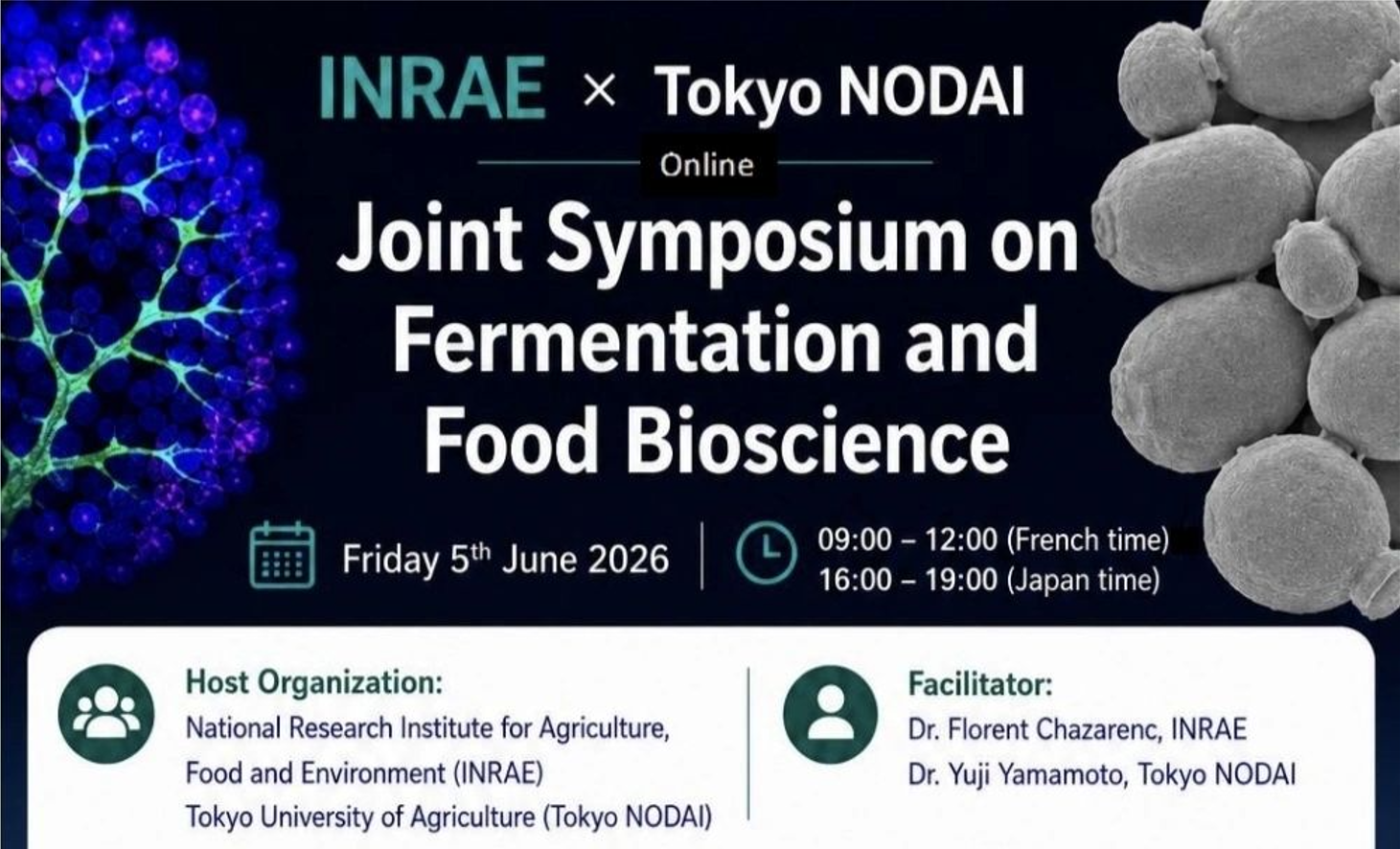
INRAE Tokyo NODAI Joint Symposium on Fermentation and Food Bioscience
On June 5, 2026, Julien Tap participated in the INRAE-Tokyo NODAI Joint Symposium on Fermentation and Food Bioscience. This online event brought together researchers from INRAE and the Tokyo University of Agriculture to discuss fermentation microbiology, food bioscience, taste, and microbiome-based approaches to health. More than 100 participants attended the symposium, most of them Japanese students, highlighting the strong interest of the next generation in fermentation and microbiome science.